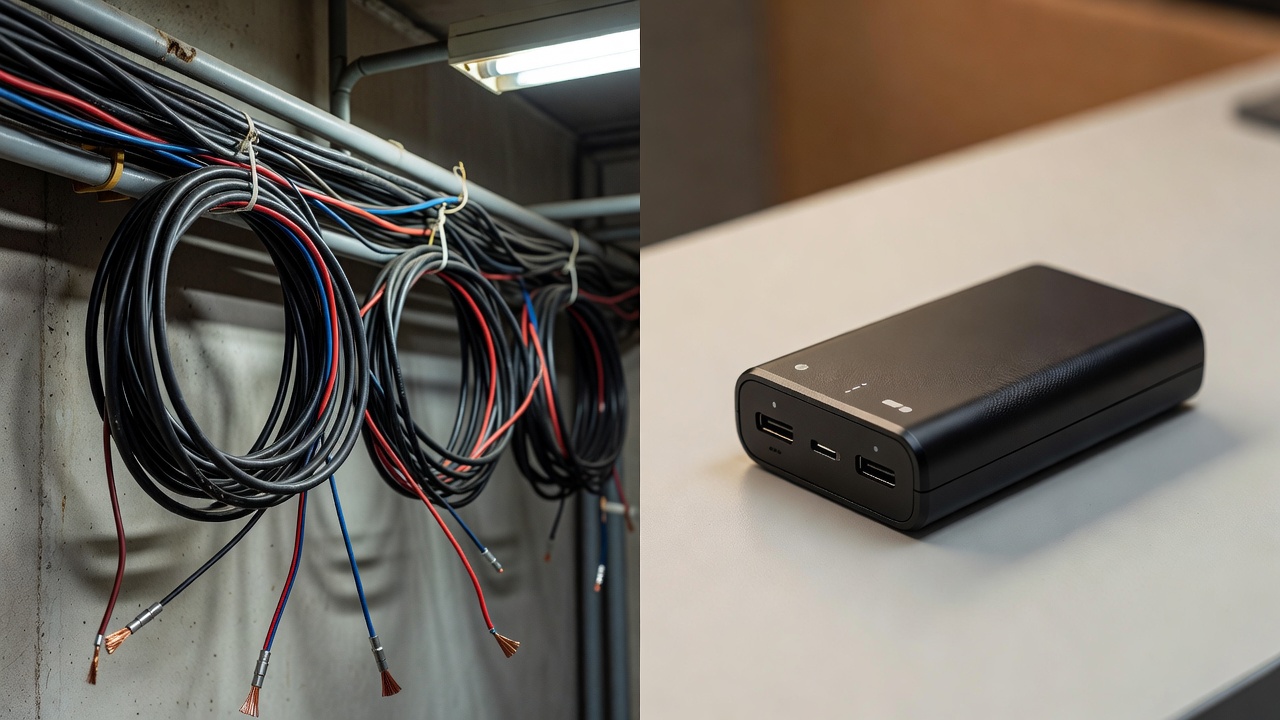
Choosing the right smart doorbell fundamentally comes down to how the device receives power. This single factor dictates the installation complexity, the physical profile of the hardware, and ultimately, the performance capabilities of the camera itself. Understanding the structural differences between wired and battery-powered models is essential for making an informed investment.
Wired Smart Doorbells
Wired doorbells connect directly to your home’s existing electrical chime circuitry. Because they draw continuous power from the household grid, they operate without the constraints of power conservation.
The Advantages of Constant Power
The primary benefit of a wired connection is performance. These devices can maintain a continuous connection to your Wi-Fi network and often support advanced features like pre-roll—capturing a few seconds of video before a motion event is even triggered. Since they don't need to "wake up" from a sleep state, the latency between someone approaching your door and you receiving a notification is generally lower.
Furthermore, wired models are physically slimmer. Without the need to house a bulky lithium-ion battery, manufacturers can design sleeker, more aesthetically pleasing units that fit better on narrow doorframes.
The Installation Hurdle
The main drawback of wired units is the installation requirement. If your home does not already have functional doorbell wiring, running new low-voltage wire through exterior walls can be an invasive and costly project, often requiring a professional electrician. Even if wiring exists, the transformer may lack the required voltage to sustain a smart device, necessitating an upgrade at the electrical panel.
Battery-Powered Smart Doorbells
Battery-operated models have democratized the smart doorbell market. They function entirely independently of your home’s electrical system, relying instead on internal, rechargeable battery packs.
Flexibility and Accessibility
The undeniable advantage of a battery-powered device is placement flexibility. You can install these units literally anywhere—on the door itself, on an adjacent brick wall, or on a gate. This makes them the definitive choice for renters who cannot modify their building's wiring, or for older homes that lack doorbell infrastructure entirely.
Installation takes mere minutes, involving only a few screws to attach the mounting bracket. Many models also offer a hybrid approach, allowing you to connect them to existing wiring purely for a trickle charge to extend battery life, while still relying on the battery for primary power.
The Trade-offs: Maintenance and Performance
To conserve battery life, these devices spend most of their time in a low-power sleep state. They rely on passive infrared (PIR) sensors to detect motion, which then wakes up the camera and Wi-Fi radio. This process introduces a slight delay, occasionally resulting in missed footage of fast-moving subjects (like a courier dropping a package and immediately turning away).
Additionally, they require maintenance. Depending on the volume of motion events and external temperatures (batteries drain faster in extreme cold), you will need to unmount the device or remove the battery pack for recharging every few months.
| Feature | Wired Doorbells | Battery Doorbells |
|---|---|---|
| Installation | Requires existing wiring & correct voltage | Install anywhere, wire-free |
| Maintenance | Install and forget | Requires periodic recharging |
| Performance | Continuous power, advanced pre-roll | Slight delay waking from sleep state |
| Physical Size | Generally slimmer profile | Bulkier to accommodate battery pack |
Making Your Choice
If you own your home and have functioning doorbell wiring with a sufficient transformer, a wired model is almost always the superior choice for long-term reliability and performance. However, if you rent, live in a home without wiring, or prioritize an effortless installation above all else, modern battery-powered doorbells offer an excellent, flexible alternative.